How Facebook Marketing Works For You And Your Business


Few marketing platforms offer the reach and precision of Facebook. Not long ago, businesses had to work hard to bring customers to their storefronts, but today, Facebook allows the masses to come to you—virtually.
Using this social media giant effectively can expand your reach, engage audiences, and drive meaningful results for your business. Here’s how to capitalize on Facebook marketing.
How Facebook Marketing Works For You And Your Business
With daily attention and thoughtful planning, Facebook can be more than just a platform—it can be a powerful engine for engagement, brand loyalty, and revenue growth.
Effective Facebook marketing is an ongoing process. Regularly review analytics to understand what’s working and what isn’t. Use A/B testing for posts and ads, analyze reach and engagement, and refine your strategy accordingly.
Tip #1: Understand Your Purpose and Goals
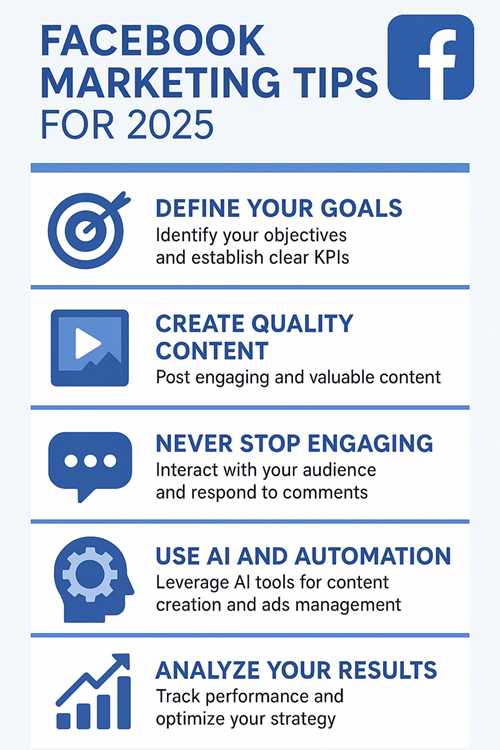
The foundation of any successful marketing strategy is clarity. Ask yourself: What am I marketing, and what do I want to achieve?
Whether your goal is to drive online sales, generate leads, increase brand awareness, or build a loyal community, having a clear objective will guide every decision you make on Facebook.
Once your goals are defined, you can create campaigns that specifically target the audience most likely to convert from a Facebook “Like” into a paying customer.
Tip #2: Define Your Strategy and Align Goals
Facebook marketing works best with a clear purpose. Start by identifying the primary role of your business page—is it to inform, entertain, sell, or engage?
Develop a strategy that aligns with this purpose and set measurable goals. For example, if your goal is lead generation, track metrics such as click-through rates on lead forms and landing pages.
Aligning tactics with a single goal simplifies tracking success and allows you to optimize campaigns in real time.
Tip #3: Prioritize Quality Content
Content quality is more critical than ever. Facebook’s algorithm favors posts that engage users—likes, shares, comments, and watch time all contribute to visibility.
Avoid generic updates and focus on content that is helpful, educational, entertaining, or emotionally engaging. Consider using a mix of formats: short-form videos, carousel posts, AI-generated graphics, and interactive polls.
Regularly review Facebook Insights to see which content resonates most with your audience and double down on successful types.
Tip #4: Maintain a Professional and Trustworthy Profile
Your Facebook page is often the first touchpoint for potential customers, so make a strong first impression.
Use high-resolution profile and cover images, craft a compelling “About” section, and ensure all contact information is accurate.
Use proper grammar, spelling, and formatting to convey professionalism. Businesses should also emphasize accessibility features—alt text for images, captions for videos, and easy-to-read text.
Tip #5: Humanize Your Brand
While professionalism matters, showing a human side builds loyalty. Share behind-the-scenes content, employee highlights, or customer success stories.
These insights make your brand relatable and trustworthy. However, balance personal content with business messaging; followers are interested in your story, but not every detail of your daily operations.
Tip #6: Leverage Social Proof and Fan Activity
One of Facebook’s most powerful features is its ability to turn engagement into marketing. Sponsored Stories, Meta Advantage Ads, and other native tools allow fan activity to be amplified to a broader audience.
For instance, when someone interacts with your page, Facebook can turn that action into an ad shown to their network, providing organic credibility and increasing reach.
Tip #7: Engage with Your Community Consistently
Consistency is key in Facebook marketing. Respond promptly to comments and messages, and create content that encourages conversation. Host live Q&A sessions, webinars, or short-form interactive Reels to spark engagement.
Communities thrive when they feel heard, so treat feedback—positive or negative—as an opportunity to improve your brand experience.

Tip #8: Maintain a Positive, Value-Driven Approach
A positive attitude goes a long way on social media. Posts that uplift, inform, or entertain are more likely to be shared.
Even when addressing complaints or negative feedback, focus on constructive, solution-oriented communication. Avoid negativity or overly promotional content, which can disengage your audience.
Tip #9: Use AI and Automation Tools Wisely
AI tools can streamline content creation and scheduling. Platforms like Meta Business Suite, Hootsuite, or Buffer allow you to schedule posts for optimal engagement times.
AI can help generate content ideas, captions, and even personalized ad copy. However, maintain human oversight to ensure tone and brand voice remain authentic.
Experiment with different tools to find the combination that maximizes efficiency without sacrificing quality.
Bonus tip: Target Smartly with Ads
Facebook’s advertising capabilities remain unmatched when used wisely. Leverage advanced targeting options—demographics, interests, behavior, and AI-driven lookalike audiences.
Test different ad formats, from short Reels to carousel product showcases, and track results closely. Privacy regulations require businesses to be transparent about data collection and ad targeting, so make compliance a priority.
Businesses that iterate based on performance data see higher ROI and sustained growth over time.
Using Facebook to grow your business requires a combination of strategy, creativity, and consistency.
By defining clear goals, prioritizing quality content, humanizing your brand, leveraging fan activity, and using AI tools smartly, your business can thrive in a competitive social media landscape.
With daily attention and thoughtful planning, Facebook can be more than just a platform—it can be a powerful engine for engagement, brand loyalty, and revenue growth.
Start today, test your approach, and watch your business benefit from the opportunities Facebook provides.
Author Bio
This user has not submitted a user bio yet
Article Comments
No Comments!
At present there are zero comments on this article.
Why not be the first to make a comment?
Similar Articles
Sponsor
Search Articles

Experts Column
Latest Articles
Featured Articles









Most Popular Articles